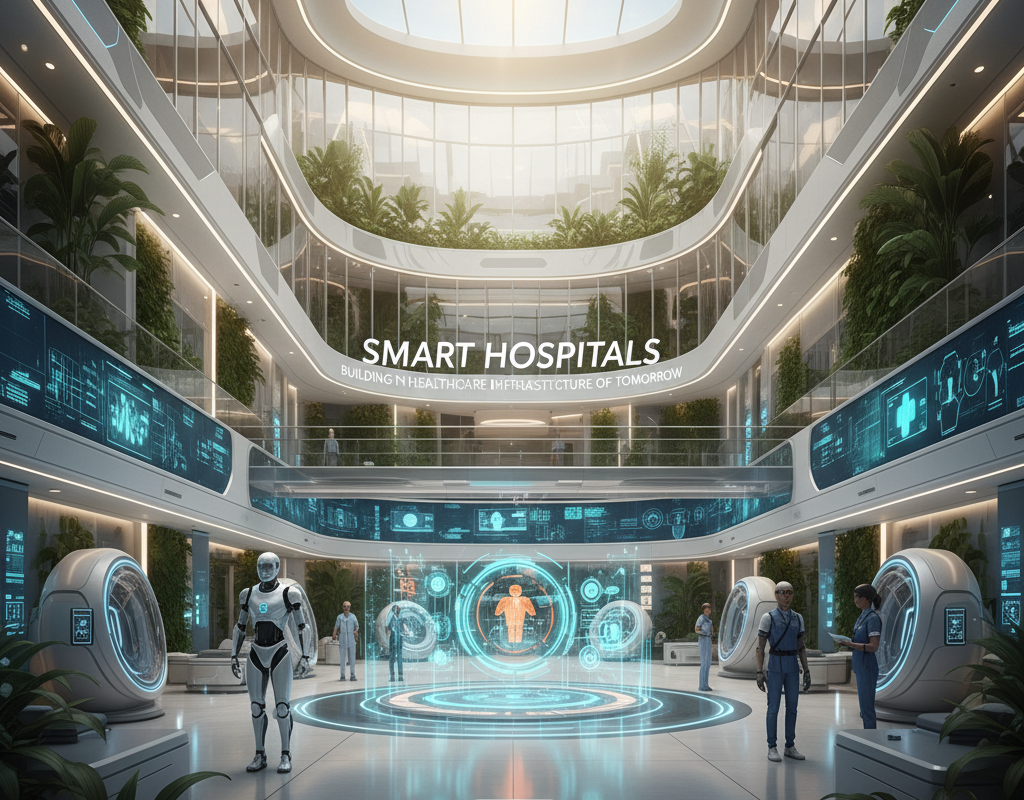
Building the Healthcare Infrastructure of Tomorrow For Smart Hospitals
This sector is on the brink of transformation as rapid technology advancements, rising patient expectations, and increasing operational pressures compel healthcare providers to think differently within the function of a hospital. The outcome of smart hospitals, healthcare facilities that incorporate digital technologies, data analytics, automation, and interconnected systems to provide high-quality, efficient, and patient-centered care.
From AI-driven diagnosis and robotic surgeries to IoT-enabled monitoring systems and automated workflows, these institutions are rewriting modern healthcare delivery.
Table of Contents
- Understanding the Concept of Smart Hospitals
- Core Technologies Powering Smart Hospitals
- Infrastructure and Design of Smart Hospital
- Benefits of Smart Hospitals
- Challenges in Building Smart Hospitals
- The Future of Smart Hospitals
- Conclusion
1. Understanding the Concept of Smart Hospitals
What is a Smart Hospital?
A smart hospital is not just a place where patients receive care, supported by the latest technology. This is an intelligent ecosystem that applies digital innovation, automation, and integration of data in the provision of effective, patient-centered, and outcome-driven healthcare.
In other words, a smart hospital is one that applies AI, IoT, cloud computing, big data analytics, and robotics in such a way that it connects medical equipment, healthcare staff, and patients through an integrated digital network. This is the interlinked system can facilitate real-time data sharing, automated workflows, and proactive decision-making.
A smart hospital that can operated on three foundational pillars:
- Automation: Reducing manual effort in clinical and administrative tasks through robotics, software automation, and AI.
- Integration: The Interoperability of information among departments, devices, and healthcare systems.
Key Characteristics of Smart Hospital
Understanding what sets a smart hospital apart from a regular one requires delving into its defining features:
- Interconnected Systems: A smart hospital interconnects medical devices, sensors, and databases.
- Patient-centered design: Each of the process for starting from check-in to discharge, is designed around patient comfort and safety. Smart hospitals are incorporating patient-centric dashboards, mobile health apps, and AI-driven engagement tools to give patients more power over their journeys in care.
- Automation and Robotics: Routine administrative and clinical tasks are automated to improve accuracy and efficiency. Smart hospitals are implementing real-time dashboards to track vital signs, predict equipment maintenance, and monitor occupancy in real time.
- AI and IoT Integration: AI-powered diagnoses and IoT-enabled medical devices help clinicians arrive at quicker, evidence-based decisions. Wearable sensors, for example, continuously monitor patient vitals and send alerts in case an abnormality is detected.
2. Core Technologies Powering Smart Hospitals
This transformation of traditional health facilities into smart hospitals is backed by a strong combination of advanced digital technologies. These are the innovations range from Artificial Intelligence to the Internet of Things, robotics, cloud computing, and blockchains that are reshaping every facet of hospital operations from diagnosis and treatment to administration and patient engagement.
1) Connected Devices and the Sensors
- Wearable devices that can track the heart rate, blood oxygen, and glucose levels.
- Smart beds that detect the movement of a patient and self-adjust either for comfort or pressure relief.
- Connected with the infusion pumps guaranteed precise dosages of medication.
- Location tracking sensors for managing medical equipment and staff.
2) Predictive Analytics for Patient Outcomes
These models analyze huge datasets from EHRs to medical imaging in order to identify the risk of complications or possible readmission of a patient.
AI can do the following:
- Predict sepsis in ICU patients hours before the onset of symptoms.
- Automation and robotics now play a critical role in enhancing precision, safety, and productivity in smart hospitals.
3. Infrastructure and Design of Smart Hospital
In this hospitals are no longer static buildings. They are adaptive ecosystems for designed to evolve with the technology and need for patient. Advanced IT systems from the basis of infrastructure along with sustainable architecture and modular design for making the hospitals resilient and scalable for decades to come.
1. Human-Centered and Tech-Driven For the Architectural Vision:
The Traditional hospital design for concentrate on space optimization and the functionality from a clinical perspective.
The Smart hospitals are designed with a human-centered approach that balances technology integration while keeping empathy and comfort in mind.
1.1 Spaces with Patient-Centric
The design is centered around prioritizing the patient’s journey.
Smart beds, ambient lighting, and voice-activated systems for contribute to comfort and increased independence in the rooms.
Digital displays provide personalized information, treatment schedules, and communication tools.
Layouts reduce stress by enhancing natural light, air quality, and noise control, which have been proven to enhance recovery rates.
1.2 Flexible and Modular Layouts
Smart hospitals will adopt modular design principles, allowing sections to be updated as technology and demands of care change.
2. Intelligent Building Management Systems (IBMS)
At the core of smart hospital infrastructure is the Intelligent Building Management System for a unified digital control system that integrates all physical and digital assets into one network.
2.1 Components of IBMS
- HVAC Systems: These include heating, ventilation, and air conditioning, which automatically adjust based on occupancy, air quality, and temperature sensors.
- Smart LEDs in Lighting Systems: Adapt the brightness and color temperature according to the needs for better comfort and energy efficiency.
- Security and Control of Access: Face identification, biometric systems, and AI-assisted monitoring ensure safety and adherence to regulations.
- Power and Energy Management: smart grids, along with renewable energy sources like solar panels, reduce cost and carbon footprint.
3. The Core of Personalized Care For Smart Patient Rooms:
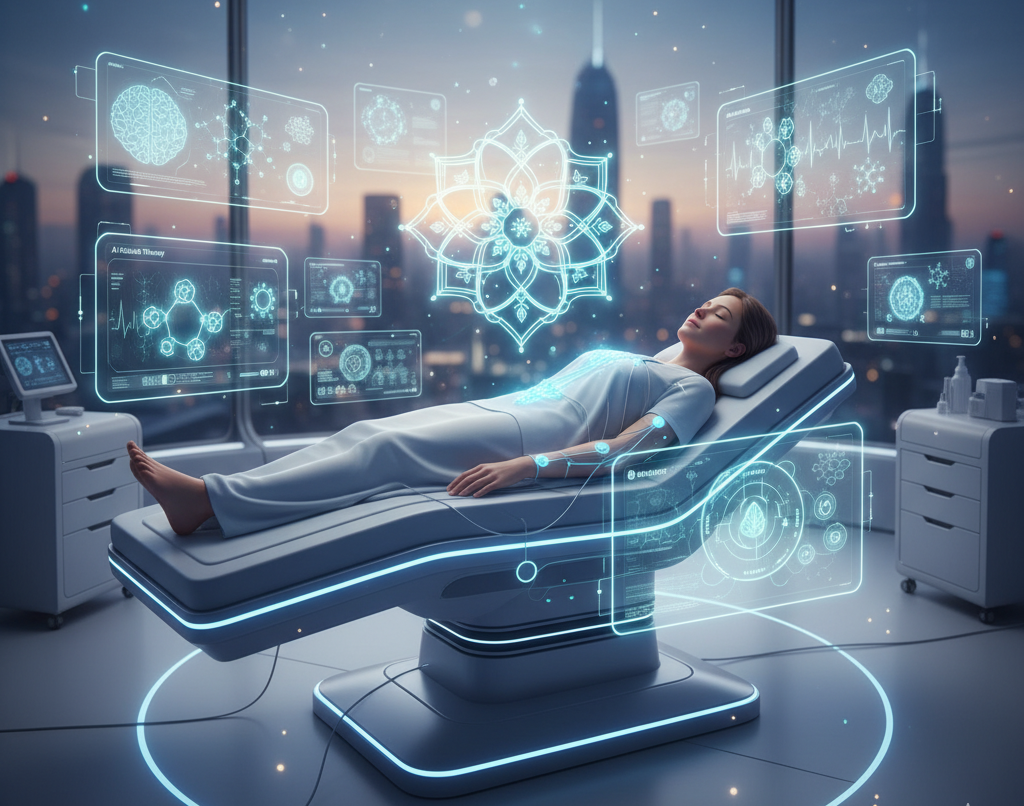
The patient room forms the real epicenter of the smart hospital experience, as it manifests the mission of the hospital in combining care, comfort, and technology.
3.1) Smart Patient Rooms Feature
- IOT-Enabled Beds: The Monitor for patient’s vital, movement, and comfort settings.
- Voice and Gesture Controls: Patients will be able to control lights, temperature, and call for assistance hands-free.
- Interactive Displays: Offer real-time health information, entertainment, and communication with family or care teams.
- Telemedicine Integration: Remote specialists can conduct video consultations directly in patient rooms.
3.2 Outcomes and Benefits
- Improved patient engagement and satisfaction.
- Quicker response to emergency calls.
- Enhanced privacy, comfort, and recovery experience.
- Automation decreased the workload for all medical staff.
4. Benefits of Smart Hospitals
The rise of smart hospitals marks a turning point in modern healthcare. By combining digital intelligence, automation, and human-centered design, these facilities not only transform the way care is delivered but also redefine the standards of efficiency, safety, and patient satisfaction.
From faster diagnosis to sustainable operations, the benefits of smart hospitals are far-reaching, touching every aspect of the healthcare ecosystem. Let’s explore how these intelligent infrastructures are improving outcomes for patients, caregivers, administrators, and society as a whole.
1) Improved Patient Outcomes and Quality of Care
At the heart of every smart hospital is a commitment to better patient outcomes. By integrating AI-driven analytics, IoT devices, and real-time monitoring systems, hospitals gain unprecedented visibility into patient health.
1.1 Early Detection and Preventive Care
Smart hospitals use predictive analytics to detect early signs of disease or complications. For example:
- Continuous monitoring systems alert staff to subtle changes in vital signs.
- AI algorithms predict post-surgery infections or cardiac events before they occur.
- Wearables send alerts when chronic conditions, like diabetes or hypertension, worsen.
This proactive approach allows for early intervention, reducing the severity of illnesses and improving recovery rates.
1.2 Personalized Treatment Plans
AI-driven data analysis helps clinicians tailor treatments to individual patients. By analyzing genetic data, medical history, and lifestyle information, healthcare providers can create personalized care pathways by ensuring that therapies are more effective and side effects are minimized.
In short, smart hospitals don’t just treat patients. They understand them, ensuring that care is safer, faster, and more effective.
2) Operational Efficiency and Cost Reduction
Smart hospitals thrive on efficiency, using automation and real-time analytics to streamline operations and lower costs.
2.1 Optimized Resource Utilization
Through AI-based scheduling and predictive maintenance, hospitals can:
- Manage bed occupancy more effectively.
- Ensure that equipment is used optimally and serviced on time.
- Forecast supply needs accurately, reducing waste and inventory costs.
2.2 Energy Efficiency and Sustainability
- Smart infrastructure employs IoT sensors and automation to control lighting, air conditioning, and water usage.
- Lights automatically adjust based on occupancy and natural light levels.
- Smart HVAC systems maintain optimal air quality and temperature.
3) Enhanced Patient Experience
In a smart hospital, patient satisfaction is a top priority. Intelligent technologies personalize every interaction, ensuring comfort, convenience, and confidence.
3.1 Empowered and Engaged Patients
Digital health portals allow patients to access medical reports, track progress, and communicate with doctors in real time.
This transparency empowers patients to become active participants in their healing journey, not just passive recipients of care.
3.2 Comfort and Convenience
Smart rooms are designed to enhance comfort and reduce stress. Patients can control lighting, temperature, and entertainment systems through voice commands or mobile apps.
Such autonomy improves satisfaction and helps recovery by creating a sense of control and calm.
4) Empowerment of Healthcare Professionals
Smart hospitals are designed not just for patients but also for healthcare providers to help them deliver superior care with less fatigue and greater precision.
4.1 Decision Support and Clinical Intelligence
AI-powered Clinical Decision Support Systems (CDSS) analyze patient data, lab results, and medical histories in real time to assist physicians in making accurate diagnoses and treatment plans.
Doctors receive instant alerts about potential drug interactions or abnormal test results, enabling data-backed decision-making.
5. Challenges in Building Smart Hospitals
While the concept of smart hospitals is highly promising for future healthcare, its reality is anything but simple. Technical, financial, ethical, and organizational obstacle that need to be surmounted for transform the traditional healthcare facilities into intelligent, interconnected, and data-driven ecosystems.
Ranging from cybersecurity threats to difficulties in integration and high costs of implementation, building smart hospitals is a journey loaded with challenges that require serious planning, innovation, and collaboration.
1) High Implementation and Maintenance Costs
1.1 Capital Investment
- One of the most pertinent obstacles in building smart hospitals is the high initial cost.
- Building the digital infrastructure that comprises IoT networks, AI systems, data centers, and robotic equipment; all these infrastructures demand huge financial investment.
- The upgrade costs for legacy systems may be unaffordable for many public and mid-sized hospitals.
Expenses include:
- Hardware and software installation
- Cybersecurity infrastructure
- Cloud computing and data storage solutions
- System maintenance and staff training
These costs, despite their long-term benefits, are hard to justify for smaller healthcare facilities, especially in developing nations.
2. Data Privacy and Cybersecurity Risks
2.1 Sensitive Patient Data
Smart hospitals generate and store enormous volumes of sensitive health data, ranging from medical records to genomic information to real-time patient vitals.
One breach might cause a leak of thousands of patients’ private data, leading to identity theft, financial fraud, and a breakdown in trust.
3. Lack of Standardization
- Healthcare does not have universal data standards that enable interoperability.
- Each vendor uses a different protocol for data formatting, communication, and security; therefore, sharing information across platforms is difficult.
- Interoperability for a smooth implementation requires the use of standardized frameworks by hospitals, like HL7 FHIR, to ensure seamless data exchange between devices and systems.
6. The Future of Smart Hospitals
The soul of healthcare-compassion, trust, and healing-remains the same in the digital world, but the way those values are conveyed has changed.
The care of the patients in smart hospitals is not limit to treatment but incorporates has all the aspects of their needs into a more holistic, personalized, and data-driven experience made possible by intelligent systems.
The focus of smart patient care is not just on the cure of the disease but on upgrading the human experience: comfort, communication, and empowerment through innovation. Technology acts not as a replacement for human touch but as its strongest ally.
1. Patient-Centered Care for Redefining
Traditional models of healthcare have placed the hospital or doctor at the center of the system. Smart hospitals has to reverse that to put the patient at the heart of care delivery.
1.1 Individual Treatment Plans
With advanced analytics and AI-driven decision-support systems, for example, hospitals can personalize treatment according to:
- A patient’s genetic profile and health history.
- Real-time vital signs collected from IoT devices.
- Behavioral and lifestyle data tracked by wearables.
1.2 Predictive and Preventive Care
Rather than wait for the onset of an illness, smart systems analyze early signs of disease. Predictive models can notify physicians regarding possible complications, such as infection risks or cardiac events, much too long before symptoms may appear.
2. Empowering Patients Through the Digital Engagement
- Smart hospitals know that empowered patients heal faster.
- Smart healthcare systems allow patients access to their health data and also provide tools to manage their own care.
- Recovery progress is tracked, with medication and follow-up reminders.
3. Individualized Education
AI-powered educational modules and interactive dashboards deliver patient education in easily understandable terms, outlining their condition and treatment. For example, a patient with diabetes can be given personalized videos regarding their condition, dietary advice, and lifestyle modifications directly through their mobile application.
7. Conclusion
It is in this background that smart hospitals, empowered by AI, IoT, robotics, cloud computing, big data, and blockchain, are redefining what it means to heal, manage, and care.
The hospital is no longer a reactive environment that simply treats illness; it is a proactive, connected, adaptive system capable of learning, predicting, and evolving with its patients.
Surgery for Robotic Systems like the da Vinci Surgical System enable surgeons to conduct minimally invasive procedures with unprecedented precision.
Artificial Intelligence and robotics together to enhance and reduce human error, and quicken recovery times. Other emerging robotic systems are capable of performing autonomous suturing, analyzing tissues, and even performing remote-assisted surgeries.


Post Comment