Type 1 Diabetes Explained: Symptoms, Causes, and Diagnosis
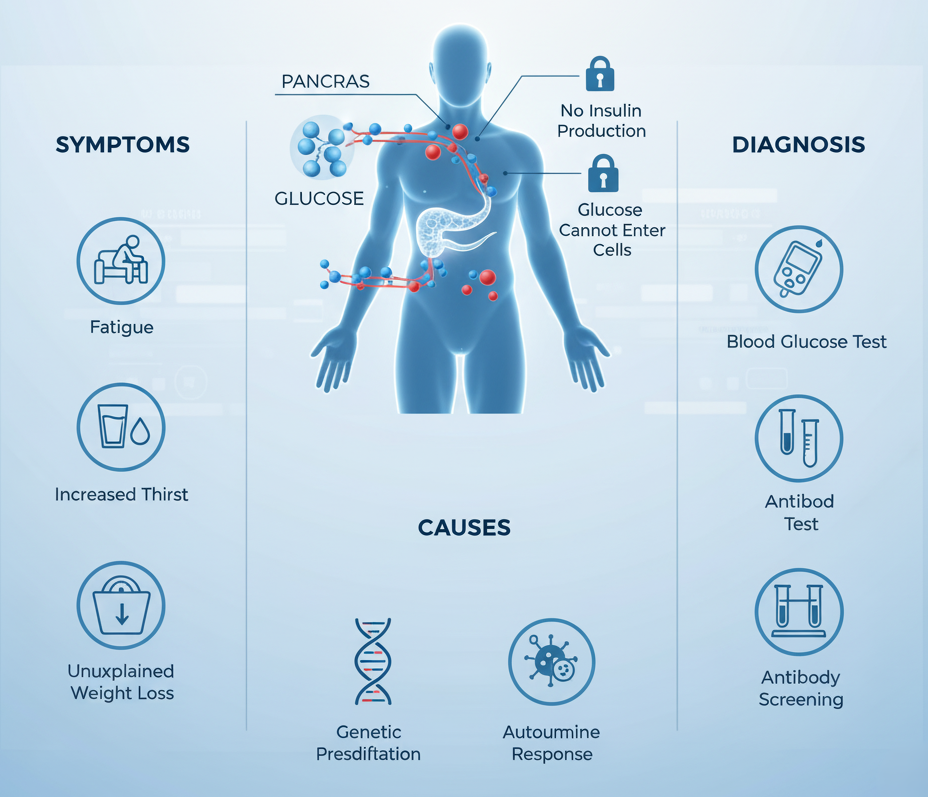
It is the chronic condition in which of the body immune system mistakenly attacks the cells in the pancreas that produce insulin, the hormone responsible for controlling blood sugar levels. This article will delve into the fundamental elements of Type 1 Diabetes: its causes, early symptoms, and how it is diagnosed.
Understanding these factors is a key point for timely detection and effective management. It can recently diagnosed, or you simply want to learn more, this article provides clear insight into the condition and guidance on how to recognize and address it with proper medical care and lifestyle adjustments.
Table of Contents
- Introduction
- What is type 1 diabetes?
- Causes of Type 1 Diabetes
- Common Symptoms of Type 1 Diabetes
- How Type 1 Diabetes Is Diagnosed
- Type 1 Diabetes: A Day-to-Day Management and Care Living with
- Recent Advances in Type 1 Diabetes Research
- Conclusion
1. Introduction
It is one of the most autoimmune diseases, but it can often remains shrouded in mysterious way. Unlike Type 2 diabetes, which generally has been associated with lifestyle factors such as diet and physical inactivity, Type 1 diabetes occurs when the body’s own immune system mistakenly attacks insulin-producing beta cells within the pancreas. This assault can render the body incapable of producing enough insulin for a hormone critical to regulating blood sugar levels.
Without insulin, glucose builds up in the bloodstream instead of being used by cells for energy, leading to serious health complications over time. Type 1 diabetes can appeared at any of the age but most commonly develop in the children, teenage, or young adult. Because it’s not caused by lifestyle choices that can individuals and families often struggle with feelings of confusion or guilt upon diagnosis. Understanding for its origins, symptoms, and management strategies is crucial for improving both physical health and emotional well-being.
2. What is type 1 diabetes?
Type 1 diabetes is a chronic autoimmune disease in which the pancreas produces little to no insulin. Insulin is a hormone that enables the entry of glucose into the body’s cells to use for energy. With no insulin, glucose that can built up in the bloodstream, resulting in high blood sugar, or hyperglycemia.
How It Differ from the Type 2 Diabetes
While both Type 1 and Type 2 diabetes involve blood sugar dysregulation, there are major differences between their causes and their treatments:
- Type 1 diabetes: Caused by an autoimmune attack on beta cells; insulin therapy is essential.
- Type 2 Diabetes: It is Usually associated with the insulin resistance linked to lifestyle factors and genetics. Examples of the management include diet, exercise, and pharmacology. Type 1 diabetes accounts for the 5–10% of all cases of diabetes worldwide but necessitates lifelong insulin replacement and close monitoring.
3. Causes of Type 1 Diabetes
The exact cause of Type 1 diabetes is still not known, but studies have indicated a major interplay among genetic, environmental, and autoimmune causes.3.1 Genetic Predisposition
Genetics are a critical determinant of susceptibility. Carriers of specific genes, particularly in the HLA region on chromosome 6, will be at a higher risk of developing Type 1 diabetes, but this is not the sole determining factor. Many people with risk genes do not develop the disease, indicating that additional triggers must exist.
Autoimmune Reaction
Type 1 diabetes is characterized primarily by an autoimmune process. The body’s immune system-which normally wages war against infection-instead attacks pancreatic beta cells.This is the ongoing immune attack eventually destroys the cells, reducing or halting insulin production. Researchers believe both T-cells and antibodies are involved in this process.
Environmental Trigger
Certain environmental factors may trigger Type 1 diabetes in genetically predisposed individuals.These include:
- Viral infections include those caused by enteroviruses or Coxsackie B viruses.
- Early exposure to cow milk proteins, although this remains debated.
Vitamin D deficiency in infants. - Exposure to cold climate, as rates of Type 1 diabetes are higher in colder regions.
Family History and Risk
A first-degree relative with Type 1 diabetes confers a moderate degree of risk, but the condition is not directly inherited. Thus, the actual risk for the child of a father with Type 1 diabetes is about 6–8%, while this is 2–4% from a mother with Type 1 diabetes.
4. Common Symptoms of Type 1 Diabetes
Symptoms of type 1 diabetes can develop is very quickly-sometimes within days or weeks-most often in children and young adults.Early recognition of the warning signs can be life-saving.
Key Symptoms Includes:
- Frequent urination or polyuria: The kidneys have to work more to eliminate excess glucose when there is too much sugar in the blood.
- Excessive thirst: the result of fluid loss through urination. Now, strong thirst ensues.
- Excessive hunger (polyphagia): Inability of the body to use glucose for energy triggers hunger, even after eating.
- Unexplained weight loss: Although appetite may be increased, the body breaks down fat and muscle for fuel, which in turn causes rapid weight loss.
- Fatigue and weakness: When there is not enough energy, a person may have symptoms of constant tiredness and feeling sluggish.
- Blurred vision: High levels of glucose can cause fluid shifts in the eyes, leading to temporary changes in vision.
- Mood changes or irritability: Blood sugar variations can cause changes in mood and concentration.
- Slow would healing, and infections often: High blood sugar can reduce the body’s ability to heal and fight infection.
In Severe Cases: Diabetic Ketoacidosis (DKA) If Type 1 diabetes is not diagnosed or treated, it can lead to a serious condition called diabetic ketoacidosis. In this condition, fat is used by the body as energy, and the blood becomes acidic due to produced ketones. Symptoms include nausea, vomiting, abdominal pain, fruity-smelling breath, and confusion. Medical attention should be sought immediately.
5. How Type 1 Diabetes Is Diagnosed
It can diagnosis relies on the blood tests, medical assessment, and autoantibody screening. Symptoms that can develop fair suddenly, so prompt diagnosis is very important.
5.1 Blood Glucose Tests
- Fasting Blood Sugar Test: A blood glucose level of 126 mg/dL (7.0 mmol/L) or higher on two separate occasions indicates diabetes.
- Blood Sugar Test: A reading of 200mg/dL (11.1mmol/L) or high, especially if the patient manifest symptom, diagnose the disease.
- OGTT assesses: Blood glucose before and after the consumption of a drink containing glucose. It is used much less frequently in cases of Type 1.
5.2 Hemoglobin A1C Test
The A1C test reflects the person’s average blood glucose over the past 2–3 months. An A1C of 6.5% or more indicates diabetes. While it’s more commonly used for Type 2, it can help assess long-term glucose control in Type 1.
5.3 Autoantibody Tests
Type 1 diabetes is characterized by specific antibodies that attack pancreatic cells, like:
- Gad (glutamic acid decarboxylase) antibodies
- IA-2 (Insulinoma-Associated-2) antibodies
- Zinc transporter 8 antibodies (ZnT8)
Their detection confirms an autoimmune etiology.
5.4 C-Peptide
Test C-peptide levels reflect how much insulin is still being produced by the body. Low levels indicate beta cell destruction consistent with Type 1 diabetes.
6. Type 1 Diabetes: A Day-to-Day Management and Care Living With
The daily management comprises monitoring blood sugar regularly, incorporating insulin, and fostering lifestyle balance.
6.1 Blood Glucose Monitoring
To the Regular monitor that can help people monitor glucose highs and lows throughout the day. Modern tools include:
- Continuous Glucose Monitors
- Flash glucose systems
- Traditional finger-stick tests
Real-time data helps in adjusting the insulin dose and avoiding hypo- or hyperglycemia.
6.2 Administering Insulin
As the body cannot make insulin, replacement therapy is necessary. Insulin administration can be done as:
- Multiple daily injections
- Insulin pens
- Insulin pumps: for precision and convenience
Some patients are now using hybrid closed-loop systems, sometimes described as “artificial pancreas” technologies.
6.3 Emotional and Mental Well-being
Managing Type 1 diabetes is emotionally exhausting. Continuous glucose checks, meal planning, and insulin adjustments may result in diabetes burnout.
7. Recent Advances in Type 1 Diabetes Research
The Science can continues to make breakthroughs in Type 1 diabetes treatment and prevention. Artificial pancreas systems-these are closed-loop insulin delivery systems that adjust insulin levels on their own, based on glucose readings. These reduce manual input and add stability.
- Stem Cell Therapy: Methods are being developed to differentiate stem cells into beta cells, which can restore natural insulin production.
- Immunotherapies: These treatments try to halt the attack by the immune system against beta cells. Teplizumab, an immunotherapy medication, has been effective in delaying the onset of Type 1 diabetes among high-risk patients.
- Smart Insulins: These insulins switch on or off automatically by detecting blood sugar, thereby reducing the risk of hypoglycemia. For the Continuous Glucose
- Monitoring Innovation: New CGM systems provide longer wear time, smaller sensors, and integration with smartphones for seamless tracking.
8. Conclusion
It can be a lifetime condition, but with today medical advancements and correct management strategies, people can lead long, active, fulfilling lives. It is very important to recognize for the early symptoms, make timely diagnoses, and treat all patients according to their individual needs. Ongoing research brings hope for better therapies and perhaps a cure.
Understanding the causes, symptoms, and diagnosis of Type 1 diabetes empowers individuals and families to take proactive steps. With continuous care, emotional support, and access to modern technologies, living well with Type 1 diabetes is not only a possibility but an achievable reality every single day.



Post Comment