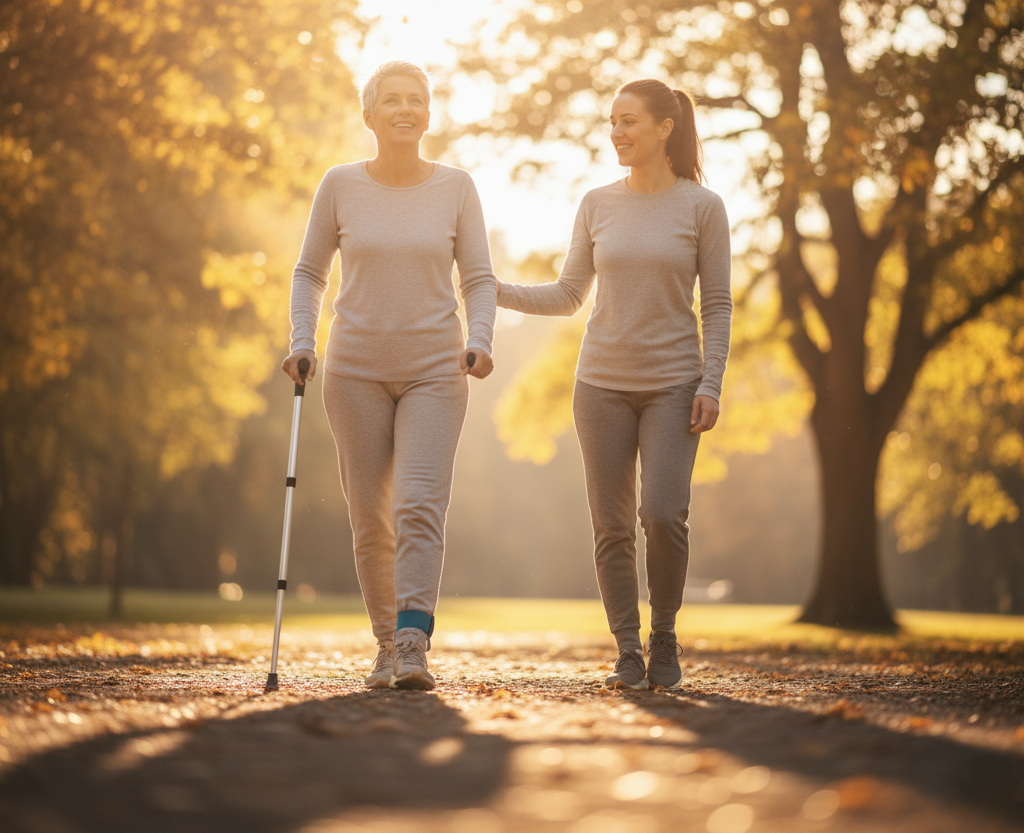
Complete Guide to Recovery, Renewal, and Resilience for Life After Stroke
This provides practical insights, emotional support, and effective strategies that could help survivors regain strength, confidence, and independence. Ranging from rehabilitation therapies to the adoption of lifestyle changes, and with a focus on mental well-being, it empowers both individuals and their caregivers to face such recoveries with hope and determination.
With its medical expertise set amidst inspirational stories, this book reassures the reader that life after stroke is not a conclusion, but a beginning-one marked by resilience, growth, and flourishing in the face of adversity.
Table of Contents
-
- Introduction
- Understanding the Stroke: Causes and Types
- For The Immediate Aftermath: Survive the Critical Phase
- Emotional and Mental Healing
- Lifestyle Changes for a Healthier Tomorrow
- The Role of Caregivers and Family
- Technology and Innovation in Stroke Recovery
- Conclusion
1. Introduction
Recovery after stroke isn’t about getting back to who you used to be; it’s about redefining what you’re capable of and creating a new you, one built on the qualities of courage, patience, and hope.
This blog is designed to reassure, support, and guide the stroke survivor and their families. It addresses the process of recovery, healing, and renewal, enabling you to face life after the stroke with hope and courage.
2. Understanding the Stroke: Causes and Types
A stroke can occurs when the blood supply to part of your brain has interrupted or reduced, depriving brain tissue of oxygen and nutrients. Within minutes, brain cells begin to die. The condition is a medical emergency that requires immediate treatment. But understanding how the underlying processes work can help survivors and their loved ones face the road forward.
There are two main types of strokes:
- Ischemic Stroke: This is the most common type, which occurs due to the blockage in an artery supplying blood to the brain. It is commonly caused by a clot or a build-up of plaque inside the blood vessels.
- Hemorrhagic Stroke: This type arises when a blood vessel in the brain ruptures, leading to bleeding and an increase in pressure in the adjacent tissue.
3. For The Immediate Aftermath: Survive the Critical Phase
- The first days and weeks after a stroke are crucial. They can be fearful, confusing, and bewilderingly uncertain. Survivors may find themselves in a medical facility surrounded by healthcare professionals, unable to communicate, move, or even recognize their loved ones.
- This stage is grueling, both physically and emotionally. The goal is for stabilization: maintaining the safety of the brain and body while physicians assess the damage and come up with a rehabilitation plan.
- Family members play an important role at this time. Presence of the family members comforts, and patience from they makes the survivor feel support. In cases where communication seems impossible, a soft touch, a familiar voice, or simply being there may spark moments of contact and hope.
- A Survivors begins to recover their consciousness for the small milestones like moving a finger, saying a word, or sitting up by themselves become very significant. This early acts of success signal the start of recovery and restoration.
4. Emotional and Mental Healing
It’s common to feel a sense of loss, sadness, anger, or anxiety after a stroke. Life is different now, and adjustment to a “new normal” isn’t always easy.
Depression and emotional turmoil can be common among stroke survivors, which can dampen motivation and overall wellness. Seeking support through psychologists and psychiatrists, stroke survivor groups, or even just talking feelings out with family and friends can significantly improve recovery.
Mindfulness, meditation, and keeping a journal are helpful tools in emotional healing. They help survivors reconnect with themselves, work through their emotions, and learn to appreciate small accomplishments.
5. Lifestyle Changes for a Healthier Tomorrow
A stroke is usually for a wake-up call to take more attention for health. Include:
- Balance diet: fruits, vegetables, lean proteins, and whole grains. Limit salt, sugar, and processed foods.
- Regular exercise: Even light activity, such as walking or simply stretching, improves circulation and strengthens the heart.
- Quit smoke and limit alcohol intake because both increase risk of stroke.
Monitor the blood pressure and cholesterol: Regular check-ups help in early detection of problems. - Rest and hydration: The body heals when it is well-rested and hydrated. A healthy lifestyle protects not only the body but also uplifts the spirit.
Every conscious choice made empowers a person and instills a sense of renewed control over life.
6. The Role of Caregivers and Family
Standing behind every stroke survivor is an invisible network of unsung heroes-caregivers and family members-who give selflessly of their time, energy, and love. Their support may be one of the most powerful methods in which feelings of despair can be turned into hope. Caring for a stroke survivor has its rewards and its challenges. The work requires patience, compassion, and emotional stamina.
The Caregivers need to take care through taking breaks, seeking support, and balancing activities to avoid the feeling of burnout.Families can contribute by celebrating successes, encouraging open communication, and promoting independence without overprotection. Love, laughter, and shared moments of joy remind survivors that they are never alone on this journey.
In many ways, recovery becomes a shared story of bravery, one that is not written solely by the survivor but by everyone who walks with them through this journey.
7. Technology and Innovation in Stroke Recovery
The field of stroke rehabilitation has seen major advances in recent years, including the use of robotic-assisted therapy to retrain limbs and improve coordination, virtual reality rehabilitation that turns exercises into immersive and motivating experiences, telemedicine and mobile apps to provide remote therapy sessions and progress tracking, and brain-computer interfaces and neuroplasticity research that helps rewire brain pathways to recover lost abilities, which can make the healing process more accessible and engaging than ever before, especially for survivors with mobility challenges or those living far away from rehabilitation facilities.
8. Conclusion
Life after a stroke is not the end, but it’s a new beginning. Every obstacle that can gets conquered in every step regain, every word articulated. This is a victory to be celebrated.
Recovery doesn’t erase the past, but it transform as a source of strength. It is with love, patience, and determination that survivors are capable of forging a life truly rich in purpose and joy-one that testifies to the resilience of the human spirit.
So, to all survivors and caregivers reading this: have faith in tomorrow. Every morning brings a new beginning, and every pulse reminds you that you have already won the toughest fight. You are still here, ready to flourish beyond the stroke.
Post Comment