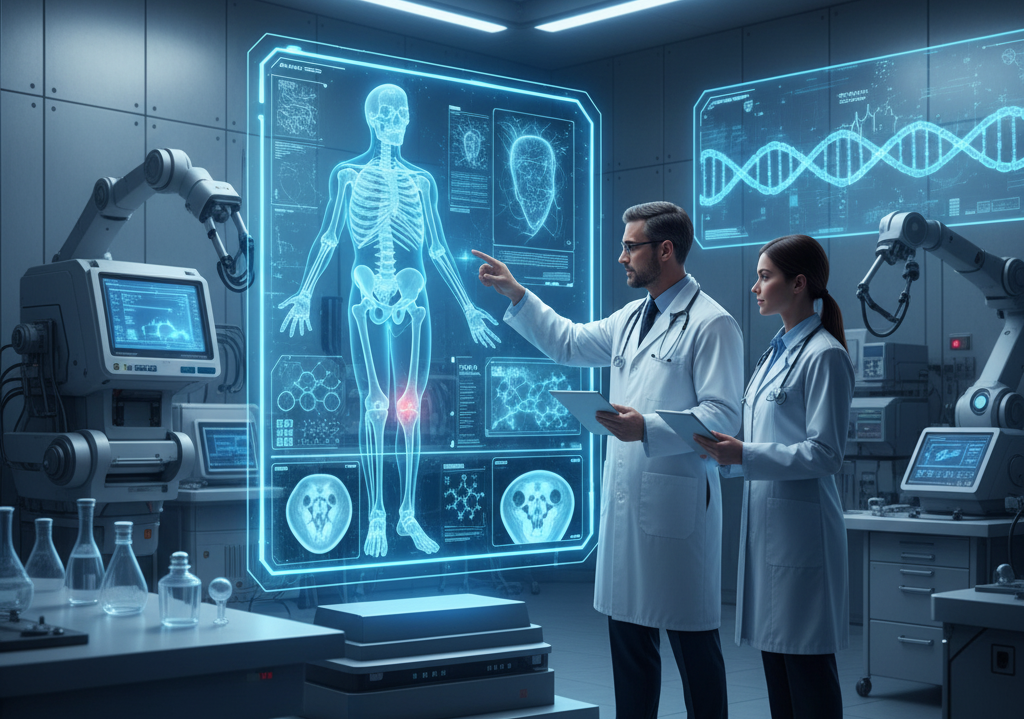
From Tumor Types to Cutting-Edge Treatments For Orthopedic Oncology
It is a specialty that can deal with the bone and soft tissue tumors, benign or malignant. This article can deep into the complexities of bone cancers, describing the different types of tumors, early detection, and the advanced diagnostic techniques available. It also covers innovative surgical and non-surgical treatment options in this field that are changing patient outcomes.
Table of Contents
- Introduction
- Understanding Bone and Soft Tissue Tumors
- Types of Orthopedic Tumors
- Symptoms and Early Warning Signs
- Diagnostic Techniques in Orthopedic Oncology
- Treatment Options for Bone and Soft Tissue Tumors
- Rehabilitation and Follow-up Care
- Advances in Orthopedic Oncology
- Living with Bone Cancer: Patient Stories and Support
- Conclusion
1. Introduction
Orthopedic oncology is a specialized branch of medicine that diagnoses and treats tumors of bones and soft tissues. It incorporates both benign and malignant growths that originate in or spread to the musculoskeletal system, including bones, cartilage, muscles, tendons, and connective tissues.
These physicians are highly specialized surgeons who merge their skills in orthopedic surgery with knowledge in oncology. Modern orthopedic oncology has greatly improved the survival rate of patients and their functional outcomes by incorporating advanced diagnostic skills, limb-sparing surgical techniques, and multidisciplinary care.
2. Understanding Bone and Soft Tissue Tumors
2.1 Bone Tumors
Bone tumors are formed when there is abnormal growth of cells in the bone. They may be classified into primary, which directly involve the bone tissue, or metastatic, which occurs as a result of metastasis from other cancers of the breast, lungs, or even prostate.
Primary bone tumors are less common; however, compared with metastatic lesions, they usually affect younger age groups, including adolescents and young adults, for which early diagnosis is absolutely crucial.
2.2 Soft Tissue Tumors
Soft tissue tumors arise from the body’s connective tissues, including but not limited to muscles, fat, fibrous tissue, blood vessels, and nerves. Like bone tumors, they can also be benign or malignant. Soft tissue sarcomas are malignant tumors that take origin from any part of the body, though they most frequently affect the extremities and retroperitoneum.
2.3 Benign vs. Malignant Tumors
Benign tumors, such as osteochondromas or enchondromas, tend to grow slowly and do not spread to other organs. Malignant tumors, such as osteosarcoma or Ewing’s sarcoma, are aggressive, invasive, and capable of metastasizing, most commonly to the lungs. The understanding of a tumor being benign or malignant will determine the mode of treatment, prognosis, and surgical approach. A full evaluation and accurate histopathological diagnosis thus become imperative.
3. Types of Orthopedic Tumors
Generally, orthopedic tumors are differentiated into primary bone tumors, metastatic bone tumors, and soft tissue tumors.
3.1 Primary Bone Tumors
- Osteosarcoma: It is the most common primary malignant tumor of bones, usually affecting adolescents and young adults. It generally arises in long bones, including the femur, tibia, and humerus. Treatment usually involves neoadjuvant chemotherapy, limb-sparing surgery, and adjuvant chemotherapy.
- Ewing’s Sarcoma: Most aggressive tumor commonly found in children and young adults. It generally arises from the pelvis, femur, or ribs. Treatment modalities include chemotherapy, surgical resection, and radiation therapy.
- Chondrosarcoma: Arises from cartilage-producing cells and tends to occur primarily in adults. Unlike osteosarcoma, it has a relative resistance to chemotherapy and radiation; its management, therefore, relies on surgical removal.
3.2 Metastatic Bone Tumors
These are the most common malignant lesions found in bone. Cancers of breast, prostate, kidney, thyroid, and lungs commonly metastasize to the skeletal system.Management focus on the control of pain, prevention of pathological fractures, and preservation of function, often with minimally invasive surgery, radiotherapy, or targeted therapy.
3.3 Soft Tissue
It can comprise more than 50 different histological subtypes, including liposarcoma, synovial sarcoma, leiomyosarcoma, and fibrosarcoma. Treatment typically involves wide surgical resection, usually combined with either preoperative or postoperative radiotherapy to minimize recurrence.
4. Symptoms and Early Warning Signs
The bone and soft tissue tumors considerably improves outcomes, but symptoms are often subtle and nonspecific in the initial stages.
Common warning signs:
- Persistent or progressive bone pain, often worse at night.
Swelling or palpable mass. - Fatigue, fever, or unplanned weight loss in progressive or systemic illness.
- Early imaging and referral to an orthopedic oncologist are crucial for timely diagnosis and efficient treatment planning.
5. Diagnostic Techniques in Orthopedic Oncology
Accurate diagnosis is cornerstone of the effective treatment. Orthopedic oncologists depend upon a mix of imaging studies, biopsies, and laboratory tests to determine the nature of the tumor, its location, and the extent.
5.1 Imaging Study
- X-ray: First-line of investigation for assessing bone structure and screening for lesions.
- Magnetic Resonance Imaging: This is the modality that provides detailed soft tissue contrast that helps to delineate the tumor boundaries and involvement of surrounding structures.
- Computed Tomography: It is Useful for visualizing of cortical bone involvement and guiding biopsies.
- Positron Emission Tomography Scan: It can find for the metabolic activity and is useful in assessing metastasis or recurrence.
5.2 Biopsy Techniques
The diagnosis is confirmed by a biopsy, which provides tissue samples for histopathological study. Technique include:
- Core needle biopsy: Less invasive yet very accurate.
- Incisional biopsy: this is done when a larger tissue sample is needed.
- Excisional biopsy: The complete removal of small accessible lesions.
Proper biopsy planning is essential. It should be carried out by, or under the supervision of, an orthopedic oncologist in order to avoid contamination of normal tissue and for proper surgical planning.
5.3 Pathology and Molecular Testing
The pathologists’ work remains indispensable for tumor classification into its histological type and grade. Molecular and genetic analyses, such as FISH, PCR, and next-generation sequencing, are increasingly used to identify mutations guiding targeted therapy and prognosis.
6. Treatment Options for Bone and Soft Tissue Tumors
Treatment of the orthopedic tumors requires an integrated approach involving surgery, chemotherapy, radiotherapy, and the emerging for molecular therapies.
6.1 Surgical Management
The mainstay of treatment for most primary bone and soft tissue tumors is surgery. The goals include complete tumor removal, limb preservation, and functional reconstruction.
- Limb-salvage surgery: In most instances, the need for amputation has been replaced by advances in imaging, chemotherapy, and prosthetic reconstruction.
- Reconstructive techniques: Utilize custom endoprostheses, allografts, or autografts to salvage the limb function.
- Wide local excision: This aims to ensure that the lesion is fully completely removed with a margin of healthy tissue to prevent recurrence.
6.2 The Chemotherapy
It is imperative in the treatment of high-grade sarcomas, such as osteosarcoma and Ewing’s sarcoma. It can be given:
- Before surgery (neoadjuvant) to shrink the tumor.
- After surgery to eliminate microscopic residual disease (adjuvant)
- Drugs commonly used include methotrexate, doxorubicin, cisplatin, and ifosfamide.
6.3 Radiation Therapy
Radiation therapy is combined with surgery in the treatment of soft tissue sarcomas and also when surgical margins are close or there is incomplete resection. The Advanced techniques such as intensity-modulated radiation therapy and proton beam therapy minimize surrounding tissue damage.
7. Rehabilitation and Follow-up Care
- Physical Rehabilitation: It has Individualized physiotherapy improves joint motion, muscle strength, and gait. Limb reconstruction and prosthesis placement are followed by specially designed exercise programs by rehabilitation specialists.
- Psychological and Emotional Support: It can Diagnosis of the bone or soft tissue cancer is an overwhelm experience.Psychological counseling, support groups, and the involvement of family members play an essential role in helping the patients overcome anxiety, depression, and changes in lifestyle.
- Follow-Up and Surveillance: Regular follow-up is very important for the early detection of recurrence or metastasis.The protocols for follow-up usually include clinical examination, imaging, and laboratory tests at defined intervals, which depend on tumor type and stage.
8. Advances in Orthopedic Oncology
- Limb-Spare and Reconstructive Surgery: The modern imaging for surgical planning provide that can exact tumor with preservation for critical structures. 3D-printed custom implants and modular prostheses provide individualized reconstruction options.
- Robotic-Assisted and Navigation-Guided Surgery: Robotic-assisted systems enhance surgical precision and minimize errors in tumor excision and prosthetic placement. Navigation technology ensure accurate alignment and better postoperative outcomes.
- Regenerative Medicine and Tissue Engineering: Investigating the use of stem cell therapy and tissue engineering will help restore bony and soft tissue defects after tumor resections, thus minimizing reliance on prosthetic implants. Molecular profiling allows the true realization of personalized medicine, wherein treatments are designed to address specific genetic characteristics of the tumor.
9. Living with Bone Cancer: Patient Stories and Support
The road to bone cancer for treatment is long, arduous, and distressed. Today Most of the patients lead normal lives due to early diagnosis, multidisciplinary care, and rehabilitation.These include support networks like cancer foundations, rehabilitation centers, and survivor for programs that offer both emotional and practical support. Sharing patient experiences engenders hope and motivates others to seek timely medical interventions.
The Rehabilitation does not relate only to physical recovery. It also covers psychological resilience, social reintegration, and long-term wellness. Many survivors become advocates of awareness and early detection, emphasizing that with modern advances, bone cancer is no longer a hopeless diagnosis.
10. Conclusion
It has evolved into a sophisticate and multidiscipline field, with various aspects offering patients for the benefits of early diagnosis, precision surgery, advanced therapies, and comprehensive rehabilitation.
From traditional surgical excisions to the 3D-printed implants and molecular-target treatments that can advance in this specialty continue to transform lives. Ongoing research and technological innovation promise even better outcomes in the years to come.


Post Comment